Shared ascent. Shared force.
Concept
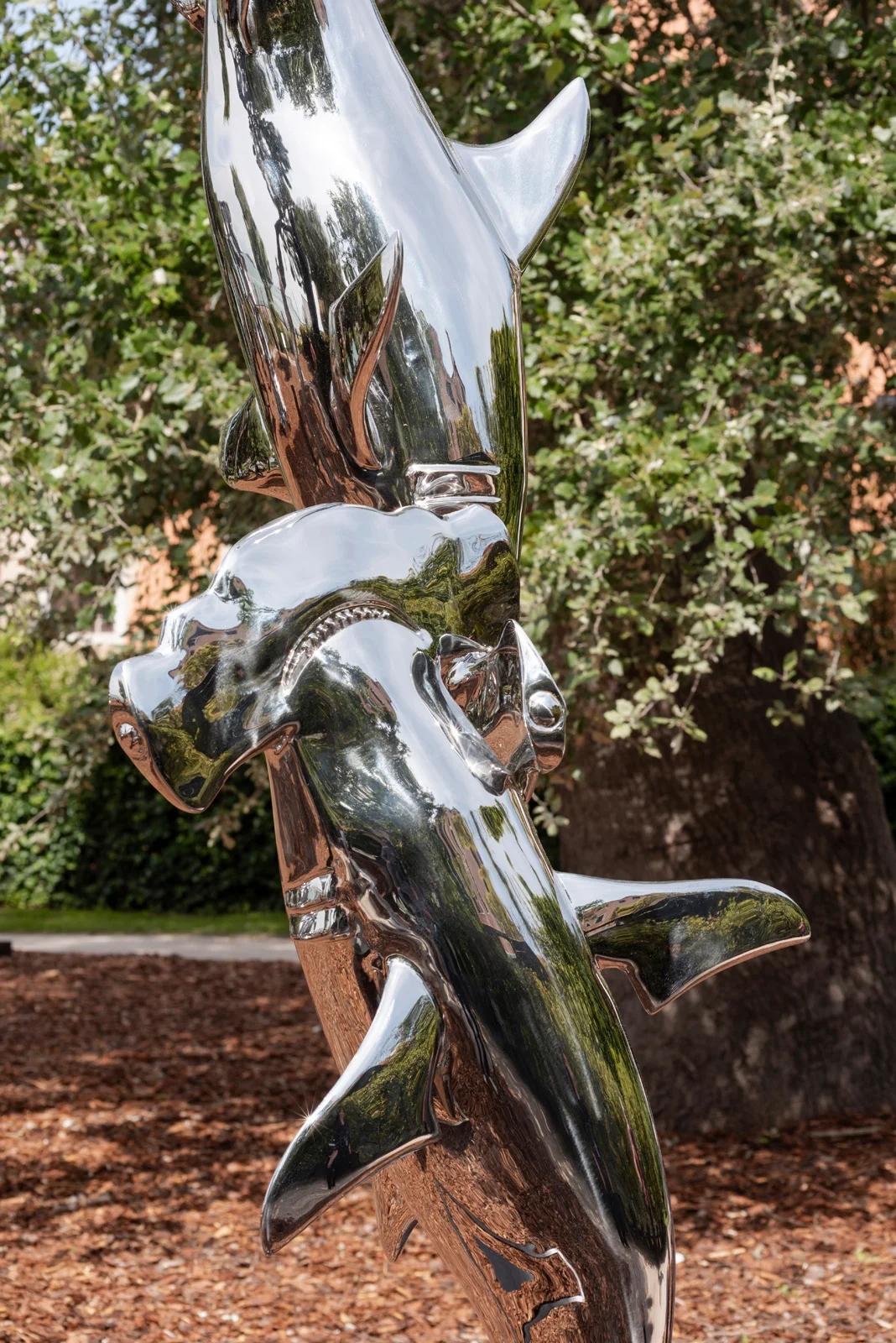
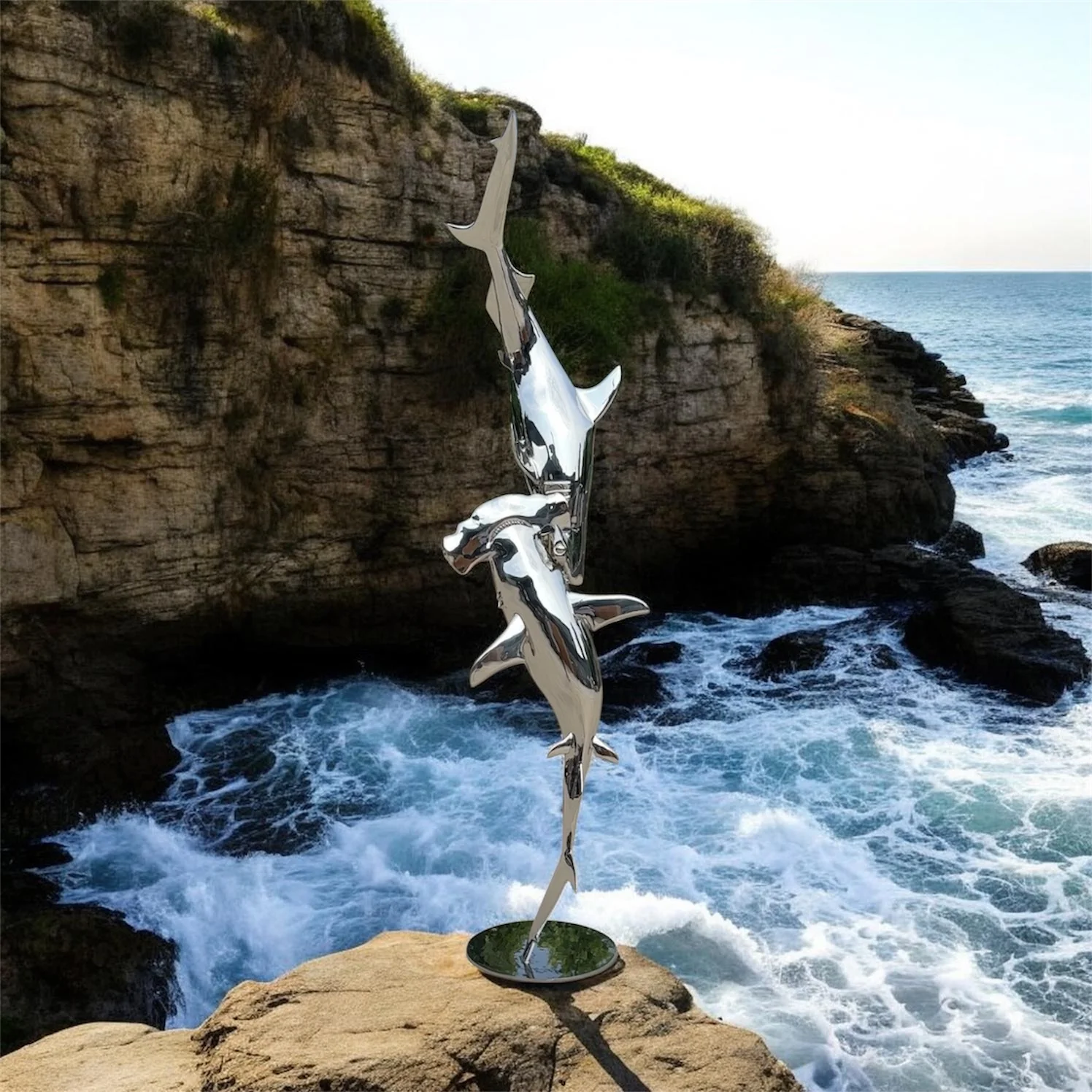
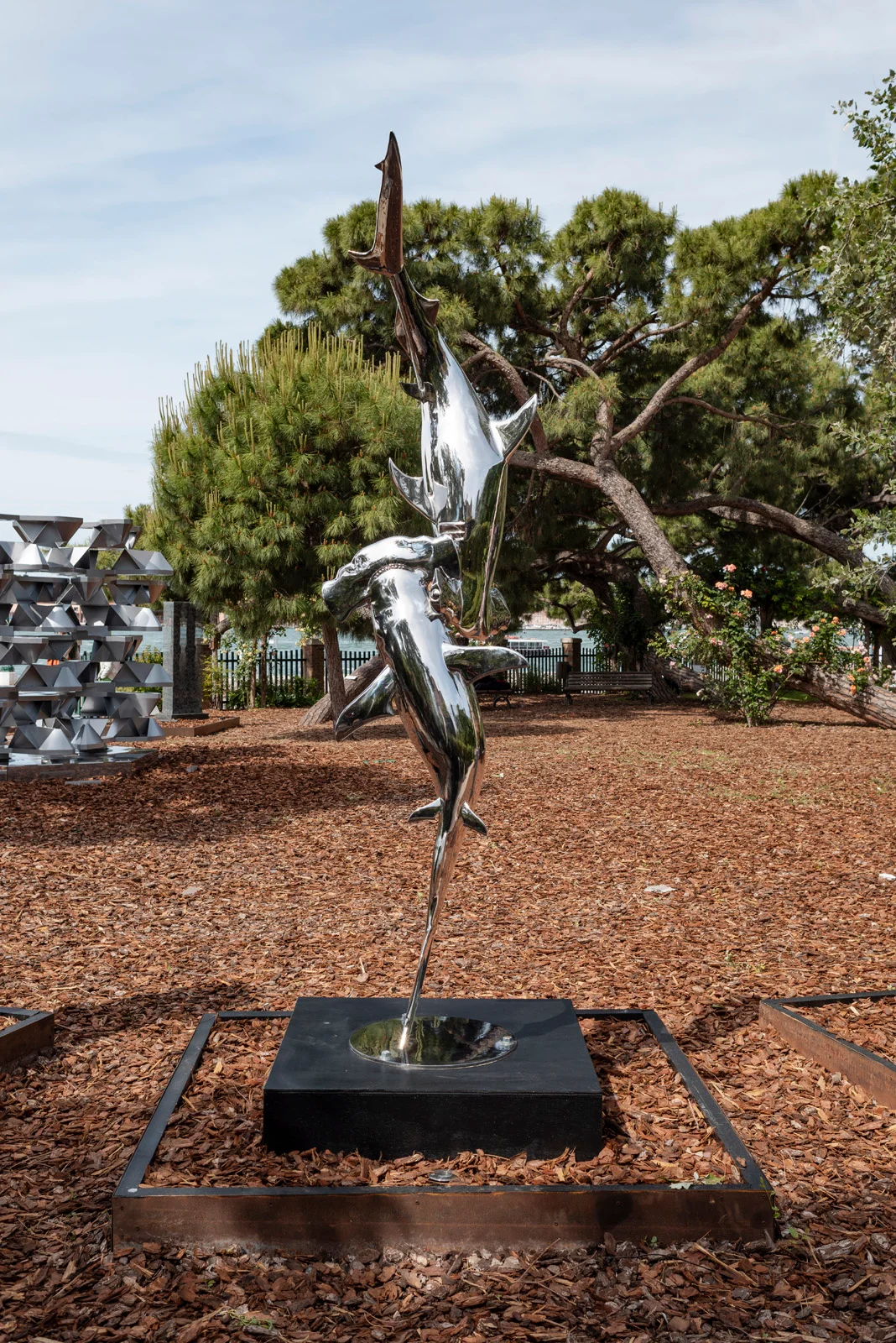
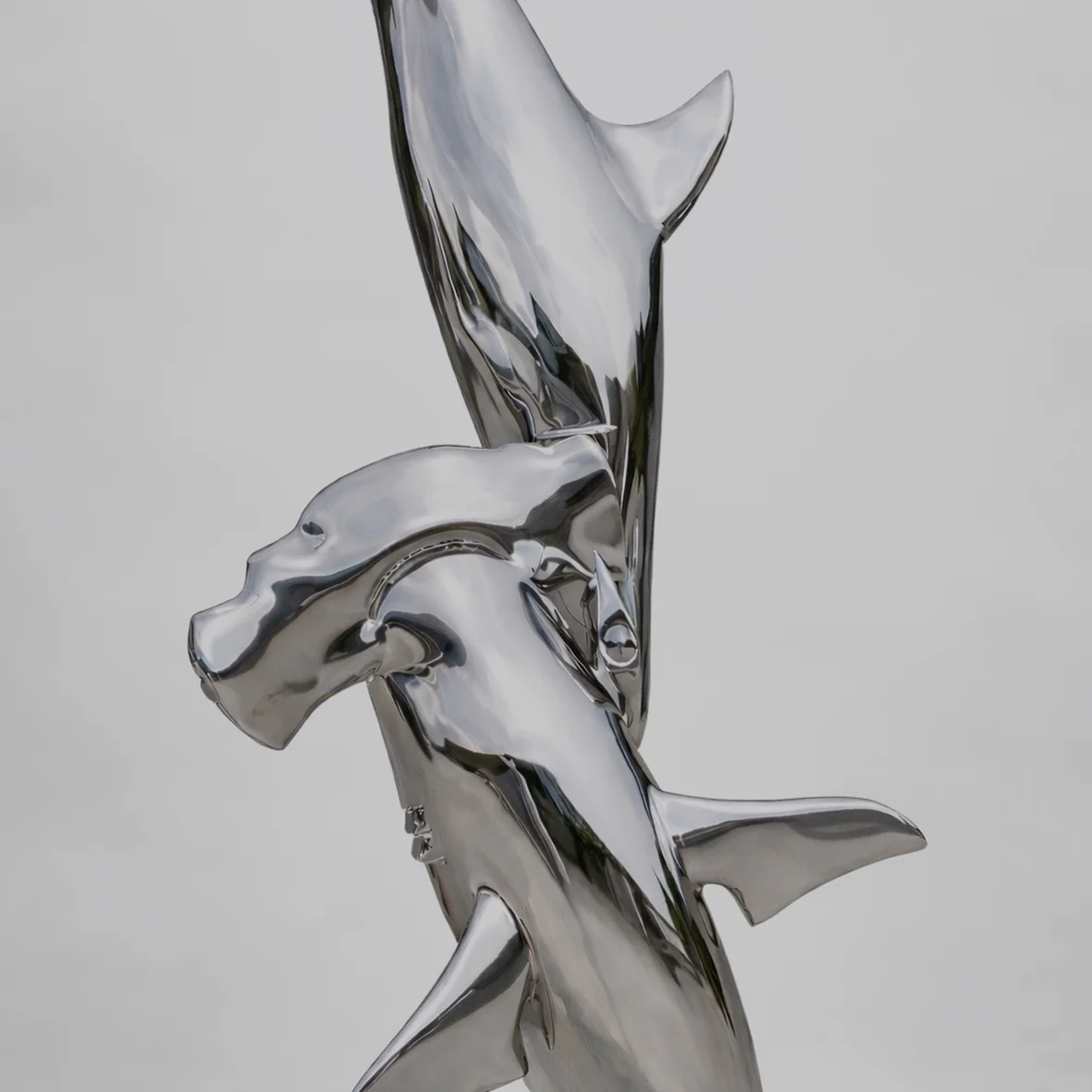
"Fratelli" presents two sharks rising together in a single vertical composition. Their mirrored heads meet at a precise point of balance, creating both a visual and structural centre. The work is built around the idea of mutual support. Neither form dominates the other. Each relies on the other for stability and direction. The sculpture translates the idea of fraternity into physical form.
Material & Surface
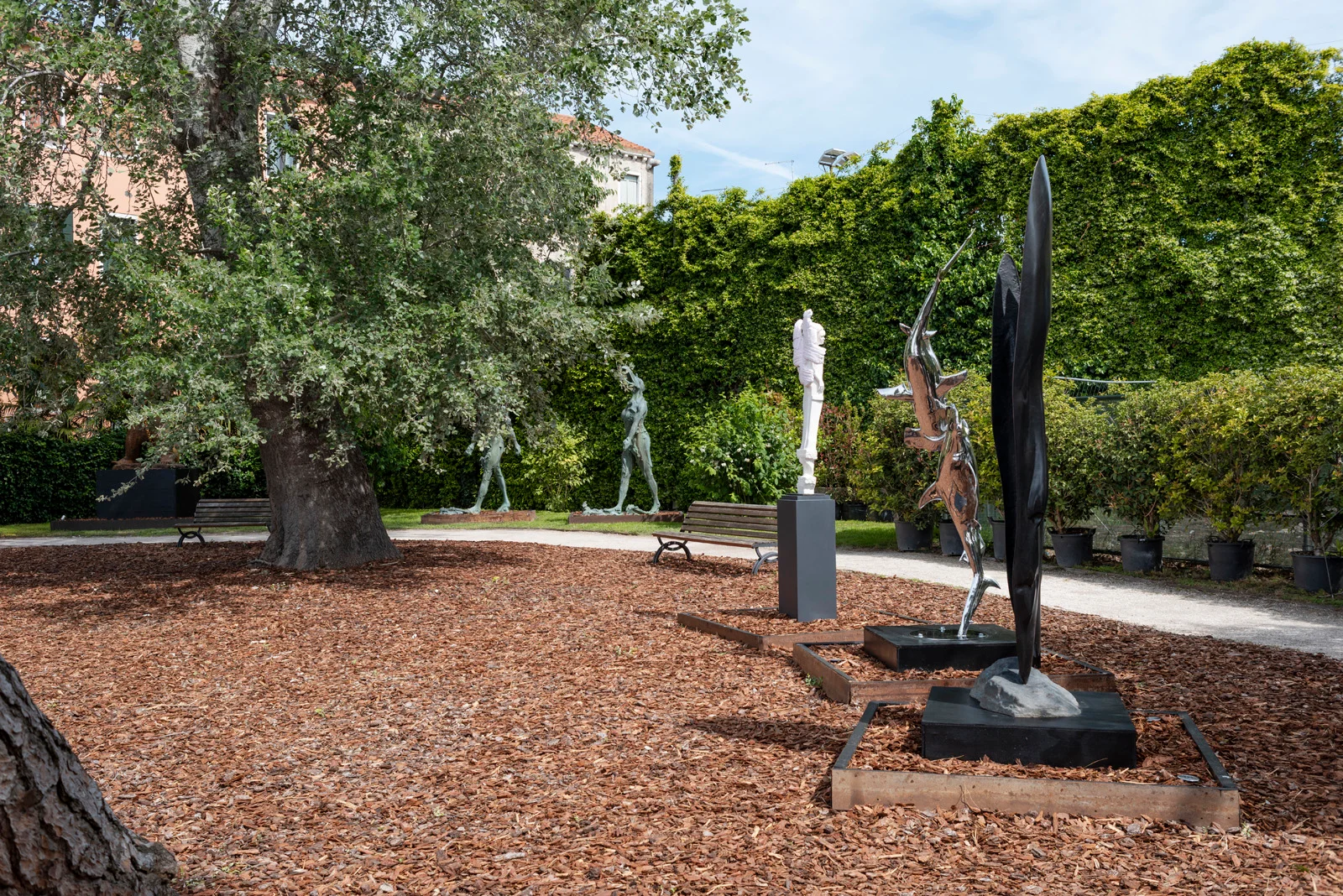
The sculpture is fabricated in polished marine grade stainless steel. The mirrored surface reflects light, sky and surrounding architecture, allowing the work to change depending on its environment. These reflections are intentional. They integrate the sculpture into its setting and create constant visual variation throughout the day.
Dialogue
The two forms are independent yet inseparable, rising through a shared axis. Their meeting point is both connection and tension, holding the entire composition in equilibrium. The sculpture proposes that balance is achieved through exchange, that direction is clarified through proximity, and that strength can be collective rather than singular.
Artist statement
In Fratelli, the sculptural form develops from a relationship of proximity and interdependence. Two animal figures, represented as hammerhead sharks, emerge in a unified configuration that brings distinct identities into relation within a shared structure.
The reflective surfaces expand the perceptual field of the work, integrating the surrounding space and the viewer into the composition. Reflection does not fragment the image but extends it, suggesting that identity is shaped through relationships and exchanges. In this sense, the gaze of the other becomes an active part of the process of constructing the work.
The hammerhead shark, associated with strength, orientation and environmental perception, becomes a metaphor for growth within a shared condition. Fratelli reflects on relationship as a generative force, suggesting that growth and movement emerge through shared strength rather than solitary assertion.